









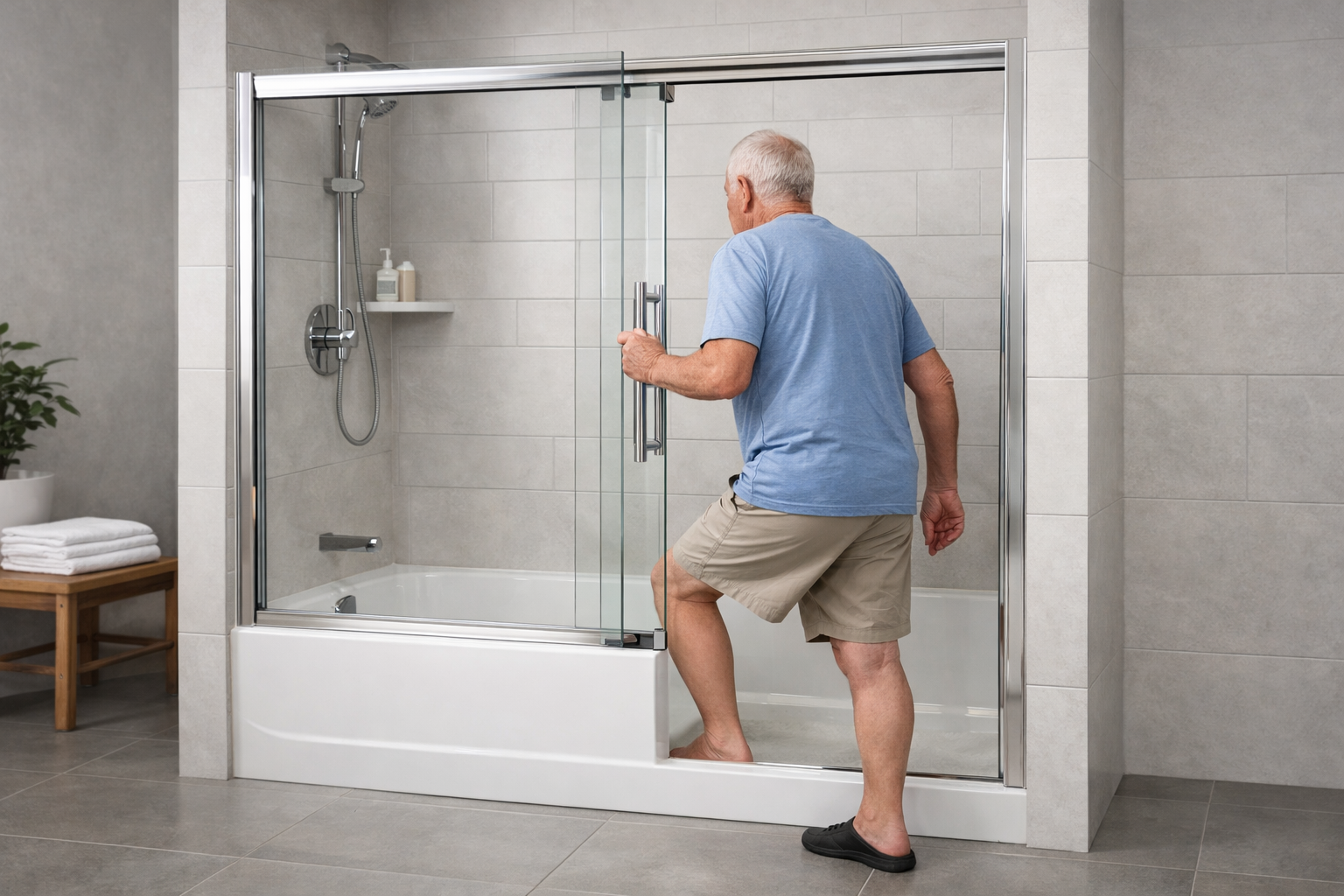
Key Takeaways
- Check access first. The best bath tub shower doors for aging homeowners aren’t always frameless glass doors; sliding doors often work better in a small bathroom where floor clearance is tight and swing space is limited.
- Measure the bathtub opening at more than one point. Bath tub shower doors are sold in standard size ranges, but alcove walls, old surrounds, and out-of-square tubs are what usually turn a simple installation into a return.
- Choose tempered glass and stronger hardware. A tub shower door with solid rollers, stable tracks, and easy-to-grip handles holds up better over time and makes daily shower use safer.
- Compare cleaning before style. Semi-frameless and hinged bath tub shower doors can be easier to maintain than some framed or fully frameless options, especially inside an older bath surround with hard-water buildup.
- Budget for the opening, not just the door. The real cost of bath tub shower doors can rise fast if the shower/tub combo needs wall repair, a new base detail, or conversion work before the glass can be installed.
- Think future-ready, not clinical. The right glass shower door can make a bathtub/shower combo feel current while still leaving room for grab bars, safer entry, and a later walk-in shower conversion if mobility needs change.
Bathroom falls send millions of older adults to emergency rooms each year, — the tub-shower combo is one of the most common trouble spots. That’s why bath tub shower doors are back in the remodeling conversation—not as a style fad, but as a practical safety upgrade for homeowners who want cleaner lines, better water control, and fewer daily hassles.
For years, a shower curtain was the default. Cheap, easy, forgettable. But it also sticks to the body, hides slippery buildup, and often leaves puddles on the floor right where a tired foot lands. Modern glass doors change that equation. The better ones open smoothly, hold up to daily use, and make it easier to see exactly what’s happening inside the bath area (which matters more with age than most people expect). And while a full walk-in shower conversion gets plenty of attention, it isn’t always the smartest first move—especially for homeowners who still want the option of a bathtub without keeping the old problems that came with it.
Why bath tub shower doors are back in the remodeling conversation
They’re back for a reason.
For years, curtains and old framed sliders felt like the default in any bathtub shower combo, especially in homes built 20 to 40 years ago. Now the pressure is different: safer footing, easier cleaning, and a bathroom that doesn’t look stuck in another decade. That’s why bath tub shower doors are showing up again in serious remodel plans.
Aging-in-place upgrades are shifting bathroom remodel priorities
For homeowners planning to stay put, the bathroom has become the first place to fix risk. Aging-in-place remodels now focus on three basics:
- better visibility inside the bath area
- less water on the floor outside the enclosure
- easier access for a walk-in feel without full conversion
In practice, modern bathtub shower doors help with all three—especially in an alcove setup where every inch matters. A clear panel makes the shower feel larger, and tempered glass tub doors add a sturdier barrier than a curtain that clings, shifts, and leaks.
Why old shower curtains and dated tub enclosures create safety problems
Old setups fail in familiar ways.
Curtains blow inward, puddles spread over the floor, and metal tracks on dated sliding doors collect grime that turns routine cleaning into a chore. For adults comparing bath tub shower doors, that mess isn’t cosmetic—it’s a slip hazard.
Even small upgrades matter. Modern bathtub shower doors, black frame tub doors, and chrome tub shower doors all bring cleaner sightlines and fewer places for mildew to hide.
Most guides gloss over this. Don’t.
How modern glass bath tub shower doors fit today’s tub-shower combo remodels
Today’s glass options aren’t limited to bulky framed units.
Homeowners can choose frameless, semi-frameless, hinged, or sliding designs that work with a small bathroom, a freestanding look nearby, or a full tub surround refresh. And that shift is why bath tub shower doors have moved from afterthought to priority in remodel planning.
Which bath tub shower doors make the most sense for safer everyday use
Not every tub door makes an older bathroom safer.
- Pick the opening style first.
- Check glass weight and hardware next.
- Match the door to the tub surround and floor clearance.
Sliding glass doors for alcove bathtub openings with limited floor clearance
For a standard alcove bathtub-shower combo, sliding doors usually make the most sense because they don’t swing into a small bathroom or block a walker. Good bath tub shower doors in this layout should glide with little effort, use stable top rollers, and keep the bottom track low-profile for easier step-over use.
Hinged and semi-frameless tub doors for wider access and easier cleaning
Where the opening is wider, hinged or semi-frameless doors can improve walk-in access and make inside cleaning simpler. Semi-frameless options often balance cost, splash control, and maintenance better than full frameless glass—especially in a remodel where the existing bath base and walls aren’t perfectly plumb.
Frameless glass bath tub shower doors: where they help and where they don’t
modern bathtub shower doors can look lighter and less bulky, which helps older bathrooms feel more open, but frameless glass isn’t always the safer pick. Heavy panels need solid anchoring, and tempered glass tub doors with easy-grip handles matter more than a cleaner sightline. Chrome tub shower doors usually show water spots less harshly than matte finishes, while black frame tub doors can improve edge visibility for aging eyes.
Corner, walk-in, and doorless ideas homeowners often compare before choosing a tub door
Some owners compare corner enclosure plans, walk-in shower conversion ideas, or even a doorless layout before buying tub doors. But for homes keeping the bathtub, sliding or hinged glass doors usually win on splash control, everyday support, and easier over-bath use.
What homeowners should check before buying bath tub shower doors
A couple replacing a worn sliding tub door in a 20-year-old bathroom thought the opening was standard. It wasn’t. The new panel arrived 1 inch too tall for the alcove, and the installer had to stop before drilling into the surround.
That’s why bath tub shower doors have to be measured before anyone shops by style alone—frameless, hinged, or sliding all depend on the real opening, not the box label.
Standard bathtub door sizes, measurement points, and why “standard” still trips people up
Most bathtub door openings fall between 56 and 60 inches wide, with common glass heights from 55 to 59 inches. But homeowners should measure:
- wall-to-wall width at the top, middle, and base
- finished threshold depth
- vertical wall plumb on both sides
A small out-of-plumb wall can throw off a shower/tub combo installation fast. In a bath remodel, even a basic alcove bathtub can vary enough to rule out a stand alone or semi-frameless option.
Tempered glass, hardware strength, and code-friendly details that matter over time
Tempered glass tub doors are the smart baseline, not an upgrade. Homeowners comparing modern bathtub shower doors should check for 1/4-inch or 5/16-inch safety glass, solid rollers or hinges, and hardware that won’t loosen after a year of daily use.
For households updating style and access at once, black frame tub doors can look sharp—but only if the frame, anchors, and handle feel sturdy enough for real-world use inside the bath enclosure.
Experience makes this obvious. Theory doesn’t.
Easy-clean coatings, track design, and maintenance issues inside the bath surround
Maintenance matters more than showroom looks.
Chrome tub shower doors usually show fewer water spots than darker finishes, and bottom-track design matters just as much as glass.
Look for:
- easy-clean coatings that cut soap film buildup
- tracks with fewer grime-catching corners
- clear access for cleaning inside the tub surround
A doorless conversion sounds easier, but for aging homeowners, a well-fitted glass door often keeps more water off the floor—and that’s the safety detail people miss.
What bath tub shower doors cost—and what installation really involves
About 6 out of 10 tub-door quote gaps come from labor and wall prep, not the door itself. That catches homeowners off guard—especially in an older bathroom where an alcove tub, surround, or floor may already be out of level.
Product price ranges for framed, semi-frameless, and frameless glass doors
For bath tub shower doors, product pricing usually breaks into three tiers:
- Framed: about $250 to $500
- Semi-frameless: about $300 to $850
- Frameless glass: about $300 to $1,400+
Tempered glass tub doors cost more than thin acrylic panels, but they hold up better — feel safer in a shower/tub combo. Buyers replacing dated sliders often pick modern bathtub shower doors in clear glass because they make a small bath look larger, cleaner, and less boxed in.
Installation costs for a bathtub door, including when a plumber isn’t the right installer
Installation usually runs $300 to $900. But here’s what most people miss: a plumber often isn’t the right pro for glass door installation—an experienced glass or bath enclosure installer is. Heavy panels, hinged alignment, and drill points through tile need precision.
Style changes the quote fast. Black frame tub doors can cost a bit more if hardware finishes are upgraded, while chrome tub shower doors tend to be easier to match with existing bath fixtures.
Conversion costs if the existing shower/tub enclosure, base, or wall surround needs work
If the old sliding door track hid damage, costs jump fast—sometimes by $400, sometimes by $2,000. Common extras include:
The data backs this up, again and again.
- Tile or wall surround repair
- Tub edge resurfacing
- Waterproofing inside the enclosure
- Minor conversion work after removing an old framed door
And if the bathtub lip isn’t flat, even the best glass doors won’t seal right.
How to choose bath tub shower doors that improve safety without making the bathroom feel clinical
Think practical first. For aging homeowners, bath tub shower doors should make entry, cleanup, and daily use easier—not turn the bathroom into something that feels medical. The best choices usually combine clear sightlines, solid hardware, and easy-to-clean glass that keeps a bathtub shower/tub combo looking current.
Best bath tub shower door picks for small bathroom remodel projects
In a small bathroom remodel, space drives the decision. Sliding doors work well on an alcove bath because they don’t swing out over the floor, while a hinged panel can suit a wider surround if clearances are generous.
- Tempered glass tub doors add impact resistance and meet safety expectations.
- Modern bathtub shower doors with low-profile tracks are easier to wipe down.
- A semi-frameless enclosure often costs less than full frameless glass but still looks clean.
Matching glass style to hardware, grab bars, and a future-ready bathroom plan
Style matters—but function has to lead. Black frame tub doors can anchor a modern bathroom, while chrome tub shower doors pair more easily with existing faucets, grab bars, and shower trim. Here’s what most people miss: hardware finish should match the future plan, not just the faucet that’s there today.
What most homeowners miss when comparing tub doors to a full walk-in shower conversion
A walk-in shower conversion sounds safer, but that isn’t always true. In practice, well-chosen bath tub shower doors—especially on a low tub with secure grab bars and a slip-resistant base—can buy years of safer use at a fraction of a full conversion cost, often $900 to $2,500 installed versus several thousand more for a full walk-in remodel.
Frequently Asked Questions
Can you put a shower door on a bathtub?
Yes—if the tub has a flat, finished deck and the surrounding walls are plumb enough to support a proper installation. Most bath tub shower doors are made for alcove bathtub and shower combo layouts, though some models also work on corner or semi-frameless setups. The main issue isn’t whether a door can go there; it’s whether the tub edge, wall condition, and opening width are right for the specific glass door.
Are tub shower doors standard size?
Not really. A standard bathtub is often 60 inches long, but bath tub shower doors come in different width ranges, heights, and opening styles, including sliding, hinged, and frameless glass options. Always measure the finished opening after tile or surround panels are installed—before that, the numbers can fool you.
How much does it cost to install a shower door on a bathtub?
For most bath tub shower doors, professional installation usually lands between $300 and $900 for labor, with the door itself adding anywhere from $250 for a basic framed sliding unit to $1,500 or more for thicker frameless glass. A simple tub and shower combo with square walls costs less. Heavy glass, out-of-plumb walls, or custom-width enclosures push the price up fast.
How much do plumbers charge to install shower doors?
Most plumbers don’t specialize in shower door installation, so many homeowners end up hiring a glass installer or bath remodel contractor instead. If a plumber does take the job, expect rates similar to general fixture work—often $100 to $200 per hour—and a typical install may take 2 to 4 hours. For frameless or hinged glass doors, a dedicated shower door installer is usually the better call.
What type of bath tub shower doors work best in a small bathroom?
Sliding doors usually win in a small bathroom because they don’t swing out into the room. That matters more than people think—especially if the vanity, toilet, or a tight floor plan sits close to the tub. A clear glass, semi-frameless, or frameless door also keeps the space feeling more open than a heavy framed enclosure.
Worth pausing on that for a second.
Is frameless glass a good choice for a bathtub shower combo?
Usually, yes. Frameless glass looks cleaner, shows off tile better, and gives an older bath a more current look without a full conversion to a walk-in shower. But it needs better wall conditions and stronger hardware, so if the surround is uneven or the budget is tight, a semi-frameless door often makes more sense.
What’s better for a bathtub: sliding or hinged doors?
It depends on how the tub is used. Sliding bath tub shower doors are practical for family bathrooms because they save space — work well over a standard alcove bath, while hinged doors give a wider opening and a more upscale feel. For homes with kids sharing the bathroom, sliding usually works better. Less swing space. Less hassle.
Do shower doors leak more than a shower curtain?
Badly installed doors do. A well-fitted glass door with correct sweeps, seals, and side rails should control water better than a loose curtain that drifts inward during a shower. Here’s what most people miss: frameless and doorless styles look great, — they demand smarter placement of the shower head and better control of splash inside the enclosure.
How do you measure for bath tub shower doors?
Measure the width at the top, middle, and bottom of the opening, then measure the height from the tub deck to the desired top of the glass. Also check whether the walls are plumb, because even a 1/4-inch shift can affect which door will fit. For a remodel, final measurements should happen only after the surround, tile, and bathtub are fully installed.
Are bath tub shower doors hard to keep clean?
They’re only hard to keep clean if the glass and hardware are chosen badly—or ignored. Clear glass shows soap film faster, while treated glass and fewer metal frames cut down on grime buildup, especially in a busy bathroom. In practice, a squeegee after each shower and a weekly wipe-down keep most sliding and frameless doors looking sharp.
What’s changing in bathroom remodeling isn’t just style. It’s priorities. Homeowners who plan to stay put are looking harder at daily ease, cleaner layouts, and fewer slip-prone workarounds, which is exactly why bath tub shower doors have moved back into the conversation. The right door can make a tub-shower combo feel more usable, contain water better than a curtain, and cut down on the grime traps that turn routine cleaning into a chore.
But the safer choice isn’t always the fanciest one.
Tempered glass, solid rollers or hinges, accessible entry, and a track design that won’t collect standing water matter more than thin claims about appearance. And before anyone buys, measurements need to be exact — tub width, wall plumb, threshold depth, all of it — because “standard size” is where plenty of remodel plans go sideways.
The smartest next move is simple: measure the opening at the top, middle, and bottom, inspect the tub deck and walls for level and damage, and compare two or three bath tub shower doors that fit those numbers before choosing a finish or glass style. That order saves money, avoids install headaches, and leads to a bathroom that feels safer from day one.
For more great reading, visit our site and explore related topics.


